
Short answer first: You read a thermocline on sonar as a thin, continuous horizontal band that sits between warm surface water and colder deep water. Active fish almost always position themselves just above or just below that band, where oxygen levels and temperature are balanced for feeding.
Once you learn how to recognize that line on your sonar screen, you stop guessing where fish might be and start targeting the exact depth where they actually live.
Many anglers fish their entire lives without fully understanding the thermocline, even though it controls where most game fish spend their time during warm months. The result is a lot of wasted hours casting into empty water.
When you understand how the thermocline forms, how it appears on sonar, and how fish behave around it, your efficiency changes immediately. You are no longer fishing randomly across depths. You are fishing a living, active zone.
What a Thermocline Actually Is in Simple Terms
A thermocline is not a structure on the bottom, and it is not a physical object floating in the water. It is a temperature boundary layer.
During warm seasons, the surface of a lake heats up from the sun while deeper water stays cold and dense. At a certain depth, those two water layers meet and form a transition zone where the temperature drops sharply over a short distance.
Above the thermocline, water is warm and rich in sunlight. Below it, the water is cold, dark, and often low in oxygen. Inside the thermocline itself, oxygen levels and temperature create a narrow vertical band that becomes the most biologically active zone in the lake.
Plankton gathers there. Baitfish follow the plankton. Predator fish follow the baitfish.
That narrow band becomes the entire food highway of the lake.
Why the Thermocline Controls Where Fish Live
Fish do not roam equally through all depths once summer heat sets in. Their bodies are highly sensitive to both temperature and oxygen. Warm surface water often becomes too hot and oxygen-poor during mid-summer. Deep cold water can also become oxygen-starved because it is isolated from surface mixing.
The thermocline becomes the perfect middle zone. It offers stable temperature, usable oxygen, and constant food movement. Active fish that are feeding will almost always relate to this depth band and even if structure or cover exists elsewhere.
This is why so many anglers mark fish at 18 to 25 feet in the middle of the water column during summer, even when the bottom is far deeper. The fish are not suspended randomly. They are locked onto the thermocline.
How a Thermocline Appears on Sonar
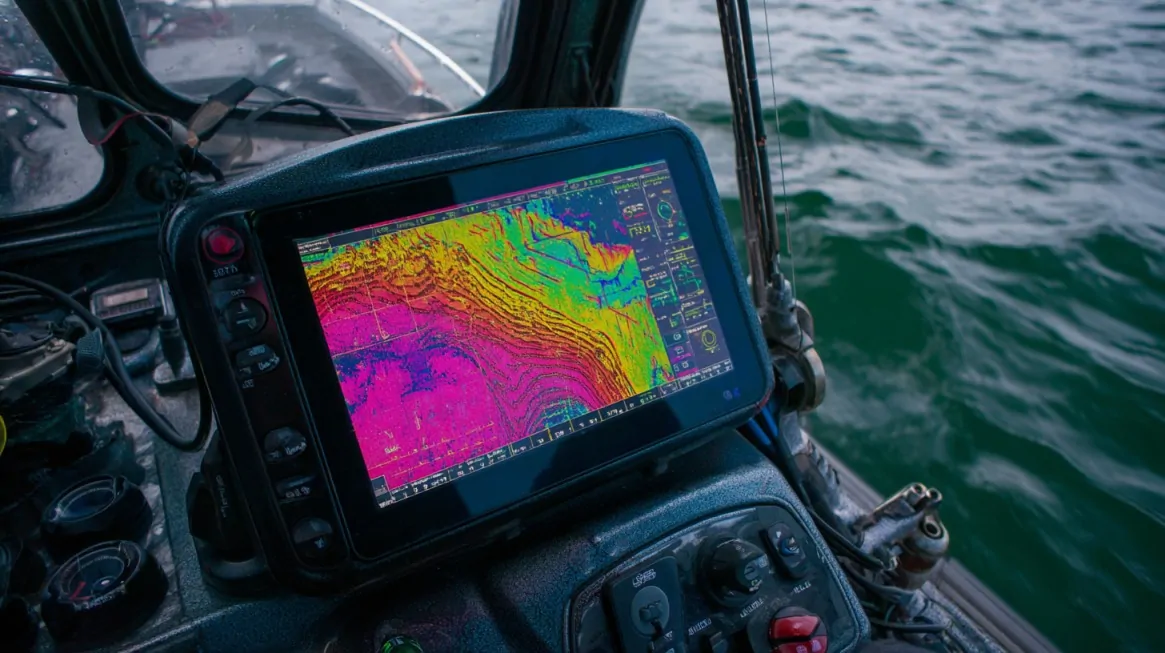
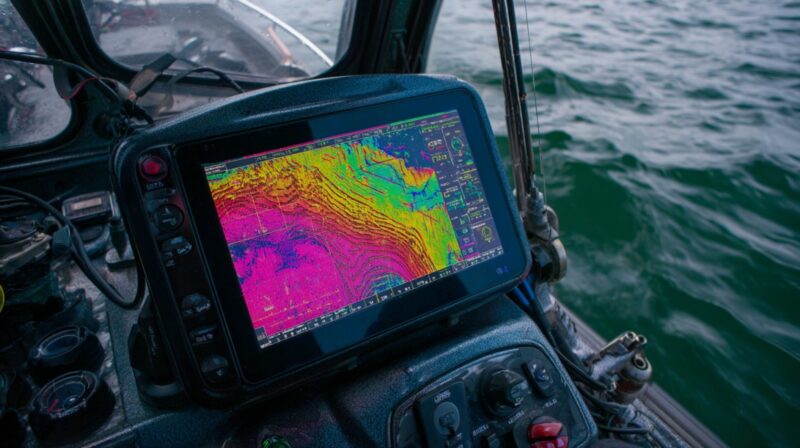
On modern sonar, a thermocline usually appears as a thin, fuzzy, horizontal line that runs across the entire screen at a constant depth. It does not move with the bottom. It does not rise into arches like fish. It often looks like light static or a soft haze stretched sideways.
Depending on your sonar sensitivity and frequency, the thermocline may look slightly different, but it always has three consistent traits. It stays at one depth across the lake. It appears as a continuous band rather than isolated marks. And it remains visible even when no fish are present.
If you see a soft horizontal line at 22 feet that never changes as you move from deep water to shallow flats, that is almost certainly your thermocline.
Why Many Anglers Confuse the Thermocline With Fish
The thermocline often gets mistaken for suspended bait or thick schools of panfish because both show up as horizontal clutter. The difference is movement and shape.
Fish appear as arcs or small, grouped dots that shift position as the boat moves. The thermocline does not break into arcs. It remains unbroken across the screen.
Once you recognize that difference clearly, your sonar interpretation becomes far more accurate. You stop targeting the thermocline itself and instead focus on the slight separations just above or slightly below it, where actual fish marks begin to appear.
The Exact Depth to Fish Relative to the Thermocline
Most active predator fish position themselves one to five feet above the thermocline, not directly inside it.
This is because oxygen concentration is usually slightly better just above the boundary, and visibility is higher for feeding. Baitfish also hold just above the thermocline, creating a stacked feeding zone.
Some species, especially lake trout and deep-water smallmouth, may suspend just below the thermocline during low-light periods, but even then, they stay extremely close to it.
If your sonar shows a thermocline at 24 feet, your most productive fishing zone is usually between 19 and 26 feet. Fishing shallower or deeper than that band drastically reduces your odds of targeting active fish.
How Seasonal Change Affects the Thermocline
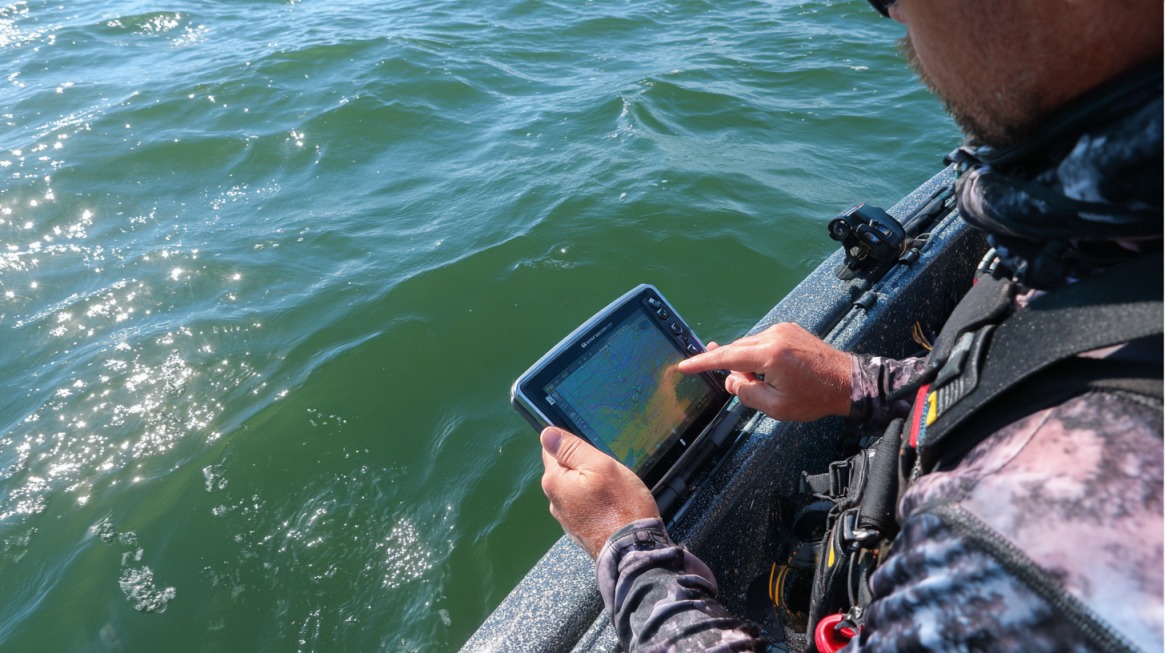
The thermocline does not exist year-round. It forms during late spring and strengthens throughout summer as surface water warms. It then weakens in early fall as surface temperatures cool and finally disappears completely during fall turnover when the entire water column mixes.
During spring pre-spawn, there is typically no stable thermocline. Fish roam freely across depths. During peak summer heat, the thermocline becomes extremely sharp and well defined. During early fall, it begins to break apart, and fish scatter again.
This is why thermocline fishing becomes less reliable once water temperatures start dropping consistently at night.
How Sonar Settings Affect Thermocline Visibility
Many anglers never see a thermocline simply because their sonar settings hide it. High sensitivity and correct frequency selection are essential. If sensitivity is too low, the thin density change of the thermocline disappears. If clutter filtering is too aggressive, the sonar may erase it.
Traditional 2D sonar at 83 kHz or 200 kHz usually shows thermoclines very clearly. Side imaging is not useful for detecting thermoclines because it scans horizontally rather than vertically. Down imaging can show it faintly, but 2D remains the most reliable tool.
Once properly set, the thermocline becomes one of the most dependable features on your sonar screen.
How Structure Interacts With the Thermocline
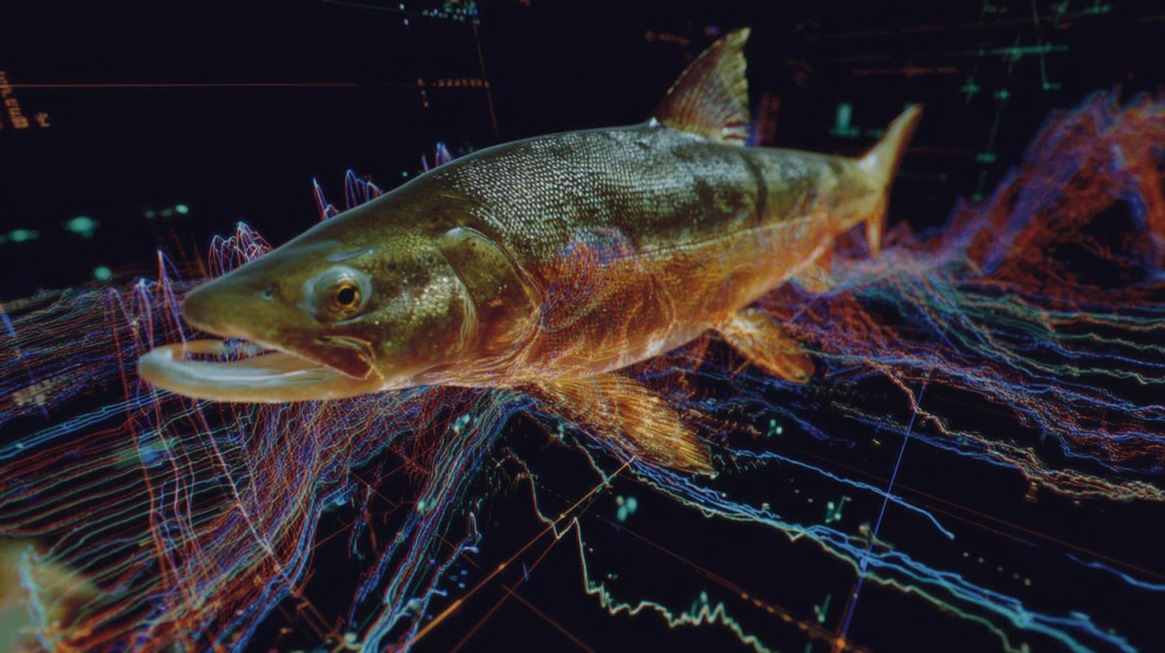
Fish rarely abandon structure completely just because a thermocline forms. Instead, they use a structure that intersects the thermocline depth. Long points, submerged humps, standing timber, and breaklines that intersect that thermal band become feeding highways.
This is why a deep point that tops out at the thermocline depth will often outproduce every other spot on the lake during summer. It allows fish to feed without leaving their preferred oxygen zone.
You are not just fishing structure anymore. You are fishing structure at the correct thermal depth.
Why You Catch Nothing When You Fish Below the Thermocline
Many anglers subconsciously assume that deeper means cooler and better during hot weather. In reality, once you drop well below the thermocline, oxygen drops sharply. Fish cannot feed efficiently in those zones even if the temperature feels comfortable.
That is why fishing directly on the bottom in deep water during summer often produces nothing despite perfect-looking structure. The fish are suspended above you in the thermal band.
Understanding this eliminates one of the most common depth-selection mistakes in warm-water fishing.
One interesting shift in modern fishing content is how many anglers now rely on digital tools not just for sonar interpretation, but also for education. Tutorials, sonar screenshots, and even automated catch log summaries are everywhere.
At the same time, some tournament organizers have started using an AI detector to verify written fishing reports and training materials to ensure they were authored by real anglers rather than generated automatically. This might seem unrelated at first, but it actually reinforces how valuable true human pattern recognition still is in fishing.
No software can teach you the subtle difference between a thermocline band and a bait cloud the way real-time on the water can. Sonar interpretation remains one of the last skills that still demands real visual judgment rather than automation.
How Baitfish Behavior Confirms the Thermocline
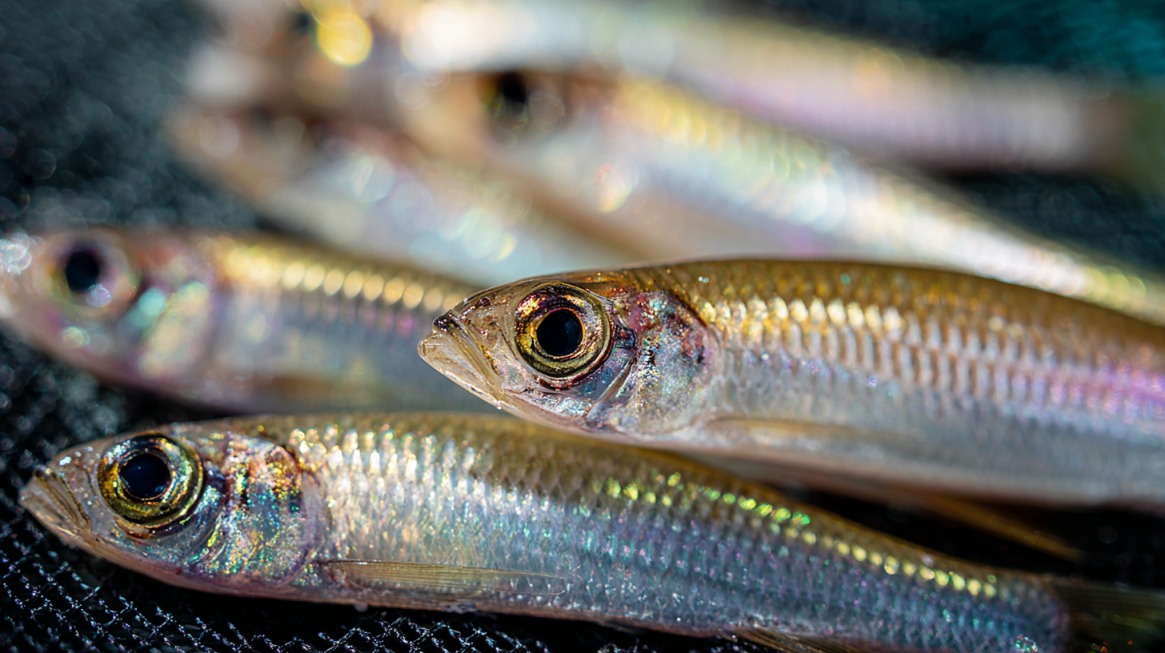
When large clouds of bait suddenly disappear from your sonar as you scan deeper water, that usually marks the thermocline boundary. Baitfish cannot survive long below it once oxygen drops. Their absence is a biological confirmation that the thermocline is active.
If you consistently see bait at 20 to 25 feet and nothing below, you are looking at a living map of the thermocline, even if the actual horizontal band is faint.
How Tournament Anglers Use the Thermocline
Competitive anglers use the thermocline as a depth limiter. They eliminate everything deeper than the thermocline from their search pattern. This instantly reduces thousands of acres of water into a narrow vertical strike zone.
Instead of guessing between 5 to 40 feet, they lock into a six-foot band where virtually all feeding fish must pass through. This is one of the biggest reasons why thermocline knowledge separates consistent anglers from casual ones.
The One Situation Where Thermocline Rules Fail
In extremely shallow lakes, heavy wind mixing can prevent a stable thermocline from forming. In rivers and tidal systems, moving water also disrupts thermocline layers. In those systems, depth stratification is replaced by current and oxygen flow patterns.
In deep, still lakes and reservoirs, however, thermocline behavior remains one of the most reliable fish-location tools available.
View this post on Instagram
Final Truth About Reading a Thermocline
You do not use the thermocline to catch fish directly. You use it to remove empty water from your decision-making. It tells you where fish cannot live comfortably during summer, which is just as valuable as knowing where they can.
Once you understand how to identify that thin horizontal band on your sonar and how fish position around it, your depth control becomes precise rather than hopeful. You stop chasing random marks.
You start targeting the biological engine of the lake itself. Having proper equipment while fishing can drastically change the outcome!